
|
|
Yes, it’s a 20-minute bus ride from the new, out-of-town train station to the city centre, but it's no more sprawling or traffic congested than Hualien, for instance, which was probably spared this damning description due to it being the gateway to Taroko Gorge, even though this southerly city is equally the gateway to the islands Ludao (Green Island) and Lanyu. Scooter gripes aside, as if there are no other means of transportation, we spent a couple of days exploring this seaside Taiwanese city, a cocktail of industrial history, urban regeneration and nature that makes this country so intriguing and endearing.
 Crumbling and stoic, old Taitung train station still stands where it always has, the surrounding scenery softened from industrial practicality into parkland, the space and buildings collectively called the Railway Art Village. Tracks still cut through the grass, banyan trees writhing up here and there, leading where they always have done. Railroad relics abound, the station sign, the platform and ticket office – now the Tourist Information Centre – the signal switches, sidings, and Old Taitung Station Authorities Garage (台東舊站機關車庫), where we saw a group of local friends playing cards at a makeshift table, and a dozing homeless man occupying one of its roomlike nooks. Nowhere is off limits: like legal urban exploration, you can peek inside and explore any edifice without a door free of the worry that you’re trespassing.


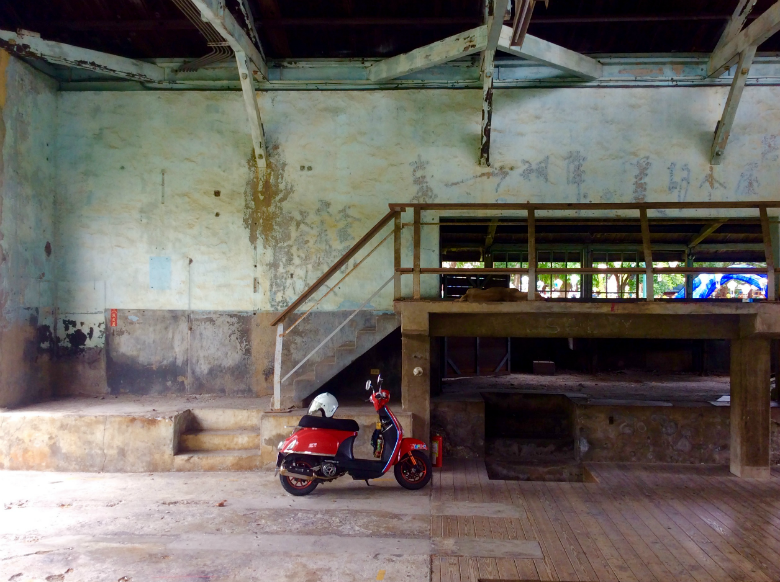 The tracks continue, untouched, north out of the city proper; a boardwalk runs the whole length as far as we explored, behind rows of houses, walking alongside locals travelling to and from work and school, cafes and eateries on our left and right, little seating areas here and there, colourful murals and fun sculptures dotting the route. After a long walk through this sleepy scenery we found our way to the old Taitung Sugar Refinery (台東糖廠). Some signs told us that it was also at one point a pineapple processing plant. It looms up on your right behind a row of trees just after old Ma Lan train station (馬蘭車站), another defunct, still-standing station which used to service this area of town.


 Although there's less interior exploring to do, a few no-climbing-on-this-please signs, walking around the grounds of the disused refinery is an eerie and interesting expedition. One of the first things you'll see is a row of sculptures, all of which are real or fantastical objects pieced together using cogs, springs, and other unnamable scraps of machines from the factory, all painted in bold, bright block colours. Further along there is a place to hire bikes, this being the final stretch of the cycle path loop. In the wide open space that follows repurposed old warehouses and storerooms squat with new life, now housing a few quiet boutique shops and cafes, old freight carriages and construction vehicles stand like exhibitions, and there's a large stage. We only wished that this area was used more, and wondered excitedly about the feasibility of putting on events or a festival here.


 As much as old industry transforms into public space, so too do the city’s natural areas become accessible and semi-urban in this hybrid townscape. To experience the best example of the blurred lines between nature and city we got ourselves a bicycle and pedalled onto the city's cycle path, which runs along Taitung's dramatic coast and Haibin Park (海濱公園), past several lakes and ponds, and into the extensive Forest Park. It takes just a few minutes to get to this lovely spot, a surprise world of natural beauty and fresh air that turns effortlessly from wiggly narrow paths in sub-tropical forest into wide tree-lined boulevards and grassy spaces that feel a little bit like London’s Royal Parks.
 Winding paths criss-cross the well maintained grounds, past community gardens, spots to chill, more bodies of water, making it easy to get lost or at least think twice about the next right or was it left you were supposed to be taking. There is an abundance of signposts, but let’s face it: misplacing yourself on the paths of dappled light beneath swaying trees in the Forest Park and beyond isn’t such a terrible thing. And for those with higher stamina levels and maybe who are actual cyclists, you’ll be pleased to know that the cycle path circumnavigates the city—from the coast, through Forest Park and back past the old Ma Lan station in a huge loop, via mountain spurs and countryside.
 Back in town at night and the old Taitung Station area was alive with illumination: hundreds of small paper hot air balloons strung up between trees like rows of lanterns, glowing and graceful. This was part of the Taiwan Balloon Festival, which ran from 1st July to 7th August 2016, and the celebration thereof helped make this unique park area shine with down-to-earth glitz, nurturing a warm, happy atmosphere. Children from local schools had decorated most of these paper balloons with joyful messages, colourful drawings of characters and classmates, teachers lending a hand with English writing; some companies from around town had even sponsored dozens of paper balloons each. We spent a good while here, lingering in front of the cutest designs and thinking of the innocent hope with which these children see the world.

 We find it difficult to fathom why a guidebook would spend any time at all to create less than a page of information and offhand opinion on a location that is essentially being dismissed. But it doesn’t matter: we were here to see the city and the city is what we saw. Taitung lives and breathes outside of any review or verdict, busily growing and evolving in Taiwan's deep south, continuing to incorporate nature and a century of history to forge a vibrant future.

|
Winding warrens of covered walkways house Taitung’s morning market in the centre of town, local ladies sell fresh fruit, vegetables, meat, fish and various cooked and prepared foods from the patchwork of stall that spill out and along neighbouring streets. This is a local market and you may not find everything to your palette, but follow the locals and be nosy. We bought a bunch of bananas. 🍚 Ming Long (明隆春捲專賣店) Always eager to seek out the best quality and best value vegetarian options we found this all-vegetarian place, run by a team of warm, welcoming women who will sit you sit you down, give you an English menu and help you make your choice. The menu is huge both in actual size and the number of items thereon. They speak little English but the old point-with-gestures-and-a-happy-face works just fine. Cheap, wholesome and traditionally Taiwanese, we went on a empty stomach and wolfed down a bowl of rice topped with mock pork mince, crunchy seaweed and peanut dust in no time. Noodle soup and dumplings also filled our stomachs here; their speciality is apparently spring rolls, which we did not try. Make sure to get there well before 8pm, when they start closing. 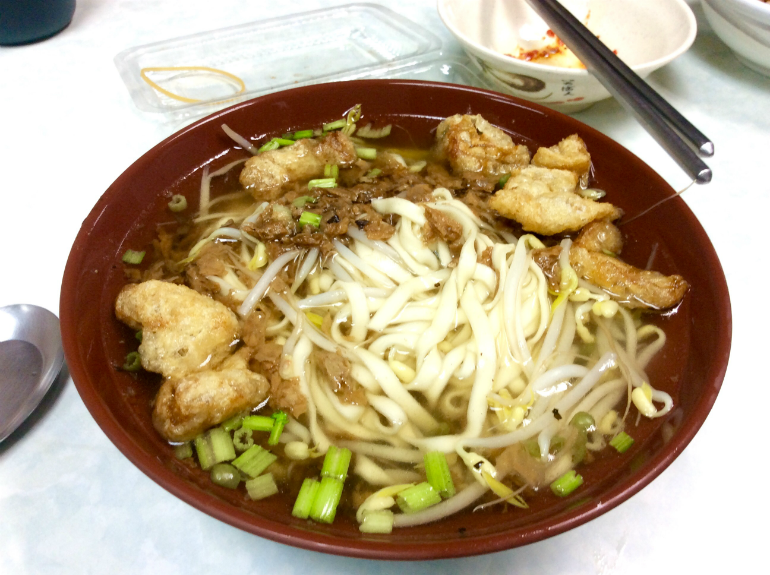
🍺 鐵道村G酒屋 Thirsty and in need of something cool and fizzy we found ourselves in an outdoor Taiwanese eatery, which serves up traditional cuisine to tablefuls of loud, jubilant locals. The name translated means "Railway Village G Wine House". We didn't eat here, but there seemed to be a constant procession of tasty food from issuing forth from the busy kitchen. We sat with a few 600ml bottles of Taiwan Beer and enjoyed eavesdropping on conversations we couldn’t understand and getting caught up in the fun, almost festival-like atmosphere. It's located here on Bo'Ai Rd.
Fun fact: Taiwan Beer was a monopoly product operated by the KMT one-party state era of Taiwan, parented by Japanese colonial rule in 1922.
THINGS THAT ARE NOT SO TASTY / HYPEFRAUD
🌰 Areca Nut
Used throughout Southeast Asia for many centuries, by royal families and aristocrats as much as common people, the betel leaf is spread with slaked lime and tobacco, then wrapped around the acorn-sized nut from an areca palm. This together is sometimes referred to as a quid, or paan (from Sanskrit meaning "leaf"). Both the betel leaf and the areca nut are psychoactive stimulants*. We noticed that people, especially in the southern, more Austronesian side of Taiwan, chew this on the regular, and we've read since then that chewing on dozens of these a day is not very good for you: the habit results in high levels of oral cancers among other health problems. Not so tasty indeed.
*Didn’t chew long enough for psychoactive effects.
|

accommodation


