Showing posts with label field recording. Show all posts

Monday, 8 January 2024

SHELF NUNNY — CASCADE GLIDE


Seattle producer Shelf Nunny aka Christian Gunning first came to our attention way back in 2013 — namely it was via 'About The Boy', a collaborative track between him and Berlin-based artist Eriko Toyoda. It was a vibe.

A decade and several releases later (via labels such as Chicago-based Palettes and Seattle's own Hush Hush Records), not to mention remixes from the likes of Kidkanevil (“who heavily inspired + shaped my sound,” Gunning says), his style of experimental beat-making remains addictively luscious.

With more than just a nod to ambient music and field recordings, his latest track 'Cascade Glide' begins trickles with natural-meets-synthetic minutiae from the outset. Synth bleeps and bloops ping and warp in the neardistance, clockwork ticks and mechanical clacks keeping time, fuzzy steps crunching on ground begin proceedings. It's like field recording if you were capturing sounds somewhere like Green Hill Zone, for example. Sonic has long sprinted through, leaving only the swaying grass and empty loops.

It morphs from this quiet, thoughtful beatscape, flying through cotton wool skies into something less pinpoint-detail, more dynamic loud-and-quiet festivities with stuttering chords and bold sections of dead air. It's a track that's equal parts chilled and exhilarating, study beats reimagined — a daydream worked into being by a novel approach to beat-led incidental music of the modern age.


  • 🔔 'Cascade Glide' is taken from Pronoia, Shelf Nunny's upcoming “concept album about the opposite of paranoia”, scheduled for release on 26th January; grab it on Bandcamp.

📠
Shelf Nunny Internet Presence ☟
soundcloudbandcamptwitteryoutube


Wednesday, 27 November 2013

TABLE MUSIC MEETING & RAINBOW VALLEY AUTUMN SONGS

Something a bit different now. It's interesting because music doesn't always have to be stuff you can dance to, stuff you can sing along to, or indeed have any real intent for anything other than being a piece of music. In essence: music as music. As such, I would like to introduce a split between two acts whose distance from each other has not stopped their very pretty collaboration; Table Music Meeting, a band from Japan, and Rainbow Valley, a singular music-maker from Southend-on-Sea (UK), have teamed up to create the wonderful Autumn Songs.

Instigated by Rainbow Valley (aka Graham Boosey and owner of microlabel, Wrieuw Recordings) when he stumbled upon the music of Table Music Meeting by chance on Lastfm, the two entities agreed to each write and record a song about autumn. It's a magical time of year; despite the cold and windy weather, autumn is special for the obvious transition between warm and cold, growth and hibernation, especially in the changing leaves. So anyway, both of em did it and here we are: Autumn Songs is here.

Table Music Meeting's 'Autumn' comes first, a blustery, breezy affair that perfectly captures the atmosphere of the season. Using an assortment of instruments — clarinet, recorder, something brassy, xylophone — sounding a little like a glorious toy orchestra, the group create a jaunty melody which contains within it a certain stubbornness to accept the onset of colder weather, as well as the feeling of that slow walks people take when admiring the season's new brown, red and yellow scenery. Dissonant chords play lightly on a piano, summoning the sharp sense of losing summer's warmth, with an overall sound that directly embeds in my head images of people wrapped up warm in cafés, looking out into an increasingly desolate natural world.

The contribution from Rainbow Valley, however, is quite different. 'Spinney' (a word that means "a small area of trees and bushes", less dense than a thicket, not as tree-heavy as a copse) is for the most part an ambient field recording of some birds - particularly, I think, song thrushes - chirping away: a very autumnal sound, the sound of early evening and swift sunsets. A slow, simple electric piano melody fades in, plaintive in the midst of nature's continuation, a flow of human understanding and feelings. Soon, a glockenspiel melody floats above, alongside an old guitar playing a slow arpeggio. The sounds of rustling leaves rise up from the background recording as the original electric piano notes grow glitchy before being cut completely out of earshot. A more delicate approach, one closer to nature perhaps, than TMM's offering.

However, both summon feelings and images associated with Autumn, though in different ways, which could reflect the potentially differing ways in which autumn as a season is viewed in Japan and the UK, respectively. Instrumental music like this, stuff that has pretty much nothing to do with current trends in the modern/popular music world, continues the tradition of classical music's supposed or maybe inherent ability to paint a picture based on a theme (whether it's antiquity or nature or whatever), but also has a touch of folk sensibility to it, utilising the organic feel and sound of mostly non-electronic instruments to take you on a short but sweet musical journey.

PS. Each song has a lovely video that has been created by Rainbow Valley to accompany the release: the autumn leaves of 'Spinney' and one for Table Music Meeting's 'Autumn'.

You can pay what you like for this digitally, or order the CD and the cute artwork (from A Sparrow By Water, asparrowbywater.com) that comes with it from Wrieuw Recordings' Bandcamp.


Like Table Music Meeting on Facebook
Hear more Table Music Meeting on Myspace

Like Rainbow Valley on Facebook
Follow Rainbow Valley on Twitter Check Rainbow Valley on Tumblr


Saturday, 23 November 2013

PSAPP WHAT MAKES US GLOW LP

Earlier this week I posted a little interview I did with the two people who make up London two-piece Psapp, namely Galia Durant and Carim Clasmann. It was kind of in conjunction with the release of their latest album, What Makes Us Glow. In some ways, it was quite beneficial to get the insight of the duo on how they make their music, what they're interested in; I find myself, right now, listening to the album thinking about the things they said about not basing songs on chords, making use of found sound via objects that on an everyday level are not deemed to be musical, finding accidental notes in certain things - "a hoover, a creaky door, a swing, a washing machine, a distant argument" - and creating melodies from them.

The album begins as it ends, with field recording of rain dripping somewhere (or maybe something being fried), making it a cyclical experience, connecting the string of musical sounds, songs, with a snippet of everyday noises that show how the creative process is not an endless composition but a series of bright sparks in the mundanity of life. The first song I encountered from this album was the 'Everything Belongs To The Sun' - its strong emphasis on beats and chanting vocals, each with a tribal lilt, gives it an exotic appeal, painted by all the uncountable and sometimes unknowable amount of percussion infused into the song. Percussion - intricate, makeshift, homemade - plays a large part. Much less tribal but just as interesting are the scurrying noises of 'That's The Spirit' - alongside twisted, breathy organ sounds, the scuttling clips of percussion help provide a "noir" atmosphere, a sense of black comedy.

That same spirit is found in 'The Cruel And The Bad', a kind of a hot & sweaty burlesque number with a macabre brass section and a galaxy of pinging noises mixed with claps and shakers in 3/4 time. 'Seven' plays out in a similar vein, whisking you away to some exotic, fantasy bar where candles strewn with melted wax light cabaret acts; it has a fresh atmosphere with a dark jazzy twist - sultry crooning, double bass, clean guitar chords in a funky progression, and there's even a background sample of someone shouting. The bossa nova rhythm and woody percussion of 'In The Black' takes you to another tropical location. Plucked strings and a old guitar providing a lovely pizzicato melody, ending in a frenzy of Middle-Eastern-sounding melodies crossing each other. This one teeters over the friendly precipice of pop.

And it's in the fuzzy arms of pop that we find single 'Wet Salt'. Luscious sweeps of percussion punctuate the song's catchy organ-type chords and melodies, as well as the richly layered vocals. A half-lament-half-celebration of the respective dirt and magic of city life, specifically in London, it dreams as much as it stays rooted to the ground. But it's here that we first see the power of Psapp to create ear-friendly tunes. Likewise, 'Your Hot Knife' is a head-bopping toytronic pop number. It's evident in its core of low electric piano chords, the vocal patterns and the way they flow in delicate harmonies. It's one of the most upbeat songs on the album and is certainly easy-on-the-ears. Some great found sounds too: for instance, a bell from a bicycle. The organ solo towards the end is a lovely subtle touch.

In a similar pop vein, the title track 'What Makes Us Glow' is really lovely. A warm and calming track soaked in comforting and playful melodies, familiar vocals float in rich harmonies especially in its chorus refrain of "We choose what makes us glow". It's a sitting-by-the-fire kind of song. Those playful melodies are a real strongpoint of the duo, strong in most songs but in particular in 'The Well And The Wall'. The way the strings are here at the start give it a baroque feel. Or even before that. It's like lute music. A medieval feel, the vocals plaintive. It gradually falls into a mind-bending subversive version of some kind of courtly dance, with lightly crashing cymbals and glitching bleeps.

But it's not all about being busy and bustling. Psapp do minimalism, too. Each sound in 'Bone Marrow' is allowed to breathe in uncrowded space. Cutesy bells and woodblocks add percussive flair whilst the different vocal tracks in the chorus are layered with a simplistic intricacy. I found 'In And Out' to be a similar experience; starting with sound of someone breathing in and out, or maybe someone pumping bellows or something, it's another homely number that sleeps with dreamy chiming xylophones, bristling with pinpoint percussion, violins enriching with their organic woodiness. These sounds remind me of the music from Zelda: The Wind Waker; woody, organic noises that rattle in a light fantasy world of trees and magic.

And it's on that note that the true nature of Psapp's What Makes Us Glow becomes apparent. It's not a clashing but a melding of worlds: the bustling cosmopolis on one side and the essence of natural folk on the other; electronic noises and pioneering experimentalism, yet a delicate organic touch with pre-electricity conjurings and orchestrations. And with the duo saying in the interview that they want to carry on being more experimental, with increased found sounds and field recordings, as well as writing scores for more traditional instruments, it seems that this twoness of Psapp is going to go through intensive development. And there's nothing better for music, or even the universal creative process, than directive forward-thinking that is not forced, but freeform and fuelled by passionate curiosity.

Stream What Makes Us Glow on Hype Machine and/or buy it on iTunes.


Like Psapp on Facebook
Listen to Psapp on Soundcloud
Visit Psapp's official site
Follow Psapp on Twitter
Watch Psapp on YouTube
Learn about Psapp on Wikipedia


Wednesday, 20 November 2013

LAZY INTERVIEW #18: PSAPP


← #17: BOTANY #19: BRETON →

Since I first heard of these guys a couple of months ago (courtesy of their song 'Everything Belongs To The Sun'), I was interested in finding out more about them. An opportunity to find out more presented itself and here I am. It's an interview with London duo Psapp, they've been active for about 11 years, released 5 albums (one of which was a Japan exclusive, and one of which I'll be writing about at the end of this week), and are credited with creating the genre "toytronica" - it sounds legitimate, doesn't it? I'll go with that. In fact, Indonesian duo Bottlesmoker are pretty toytronic as well. What is toytronica? It's electronica with the additional introduction of toy instruments (children's keyboards, play-a-long guitars, GameBoys, etc) as well as homemade stuff, maybe including circuit-bending as well.

Anyway, that's enough of that. And if you don't know anything about them at all, you should have a listen to their latest single 'Wet Salt' or have a search through their extensive back catalogue. As for now, let's have a look-see at what makes them tick, eh?


Who are you? Where are you from? What do you do?
Carim: I am Mr Psapp, aka Carim Clasmann, born in Cologne, Germany and most things I do revolve around composing, producing, mixing and mastering music. Apart from making music with Mrs Psapp I work as a sound engineer, music producer and mastering engineer.

Galia: I am Mrs Psapp AKA Galia Durant. We are mongrels from lots of places, but mainly London and Cologne. We make songs out of objects that sound good. I do a lot of drawing too.

Why did you decide to start creating music?
Carim: I think my most transformational moment was when a friend of mine lent me his Tascam 4-track cassette recorder. I was only 14 years old and all I ever wanted to do then was write and record music. It was like opening a magic box and suddenly understanding that music can be pieced together of whatever layers you want to add.

Galia: I’ve been making music since I was a teeny tiny tiddler so it was less of a conscious decision - it was inevitable.

How would you describe your sound? What makes you and your style stand out?
Galia: We use a lot of objects we find and homemade instruments in our music. We combine this with vocals, violins, toys, guitars and anything within our grasp.

Carim: Our songs are mostly not based on chords but on melodies and counterpoints, very much like classical compositions. So as all the melodies intertwine they create passing chords and harmonics. The same applies to our rhythms which are layers of individual percussion rather than a drum kit. But we are not strict about this because that would be an unnecessary limitation. As far as sound is concerned any sound emitting object is a potential instrument may it be a field recording, a log of wood or a piano. We very much enjoy experimenting and creating our own instruments as even a tiny alteration in texture can create a unique atmosphere.

Is there a perfect time and place for listening to your music?
Carim: On the sofa in the library because that’s where my nice stereo is set up.

Galia: For me it’s on headphones - there is so much intricate detail in our music … and lots of different ways of listening to it.

What inspires you most when writing a song?
Carim: For me it's the atmosphere in the studio and the total cut off from the world outside. Sometimes the bubble bursts by just a small distraction.

Galia: Everything. It’s hard to filter it sometimes. We tend to be inspired by each other, other people, the weather, joy, drudgery and the magic of being in the studio.

What is your most memorable musical experience?
Carim: I don't have a very good memory. Galia and I playing the keyboard, layered with a whole new set of freshly recorded sounds, together is definitely one of my favourite things in the world.

Galia: There are so many moments. One that comes to mind is a particularly prolific period when I was staying on my own in Carim’s place with no heating in midwinter, homeless and jobless with only my keyboards, cigarettes, sausages and some thick socks to comfort me. I just wrote and wrote.

What are your favourite three songs at the moment?
Carim:
Moondog - "Bird's Lament"
Can - "She Brings The Rain"
Talk Talk - “Ascension Day"

Galia:
Aksak Maboul - "A Modern Lesson"
Talk Talk - "I Believe In You"
Susan Cadogan - "Hurt So Good"

Who do you most admire in the music world?
Carim: Anyone who stays true to himself. I wouldn’t know where to start singling out individual musicians.

Galia: Yep. Definitely. But as for singling out a lone person - well this is like choosing your favourite album ever - it’s just impossible! Different music for different moments, and different people for different flavours of admiration. In your opinion, what is the future of music?
Carim: I don't think many people will want to explore what is between the twelve semitones of an octave but there is definitely a lot of scope for different rhythms and sounds to spill over from what is now deemed experimental into more commercial music. Personally I am always very happy about tracks not being in 4/4.

What's the future of your music - what do you hope to do next?
Carim: We want to get back into the studio soon any try out some of the ideas spooking through our heads. Usually whatever I put in comes out quite differently once Galia gets involved and vice versa. I want to try writing some songs with found sounds being more at the forefront, picking out their natural notes and adding instruments to fit them rather than starting on a guitar. Maybe also something very quiet, whispery, hardly audible vocals, leaving large spaces. I also imagine building a giant musicbox with a large rotating drum that spins and hit various objects in its path. But for Psapp we just need to sit down together and then all plans we made on our own become pointless and we’ll do what feels right at the time anyway.

Galia: Everything Carim says sounds bloody excellent… and I really want to try scoring some classical instruments. We have done this a bit in the past but I think it would be a real thrill to try out more instruments. Also we should definitely build more instruments….. put all of Carim’s DIY and soldering equipment to good use. I like accidental notes in sounds which then turn into a melody of their own - a hoover, a creaky door, a swing, a washing machine, a distant argument.

What, aside from music, is most important to you?
Carim: My lady, my cat Marbles, eating too much cake, a hot summer that lasts for 6 months, keeping my brain busy and feeding it with fresh new ideas.

Galia: My boy, my babies and my brain being full and in danger of bursting.


Don't they sound just lovely? Experimentation in music is what keeps it alive, for sure, otherwise we'd be in a perpetual loop of people doing pretty much the same old thing. What's clear is that Psapp, as a pair, are not only passionate about music but also about the very sounds that make up music itself. Taking objects that don't have musical connotations whatsoever and forcing them into a musical dimension, not even basing songs on chords or progressions but rather on the paths that each sound can take within a melody - both of these show a clear desire to cultivate sounds, hear singular sounds, showcasing their individual tones and textures rather than that of collective, pop-driven chords.

Some of their music has been used in TV programmes, and it's no surprise: Psapp's music bursts with an original freshness, with collections of melodies and multi-faceted percussion that conjure emotions, atmospheres, or which perfectly illustrate certain scenes of life. And it's all thanks to the outside-the-box yet technical thinking in Psapp's positive and experimental approach to making music; it certainly bodes well for the future of music, when experimentation is so much more widespread and widely accepted, with Psapp echoing the undertones of this change in the music world's dynamic well before the popular outlets began to recognise the fact.

Please stick around for what the words I will write about their latest album, What Makes Us Glow.


← #17: BOTANY #19: BRETON →


Like Psapp on Facebook
Listen to Psapp on Soundcloud
Visit Psapp's official site
Follow Psapp on Twitter
Watch Psapp on YouTube
Learn about Psapp on Wikipedia


Wednesday, 13 November 2013

UIO LOI PYOBACHI

FIRST OF ALL: Apologies. I'm sorry to everyone who's emailed me with music so far. A lot of it I just haven't got round to listening to yet. But I know what it's like to sit and wait for replies to emails you've nicely sent out so over the course of the next few days I will be having an Email Marathon. Anyway, this artist, the USA-based Zoom Lens associate Uio Loi (pronounced "oo-ee-oh loy" - real name Kyle Yerhot or K. Yerhot; I prefer the latter) has recently created and released a collection of songs, an album basically I dunno why I referred to it as that, called Pyobachi. It arrives care of brand-spaking-new art collective MI AJIRA and it's a really nice listen.

What is it? Essentially it's a collation of short songs linked in their similar aesthetic. Mr Yerhot himself says that it "focuses on using general MIDI sound samples mixed with modern electronic music & field recordings to create a juxtaposition of old & new." He also describes it as "Beautiful & ugly," and whilst it could seem an unflattering sub-text to bestow on his own creation, it's more of a romantic feeling than anything else. I mean Romantic. Not romantic. I believe, in this respect, the song titles help as a guide. These are vignettes, short poems of sound that conjure images and feelings related to loose subject matter falling under the titles. Which can indeed be wide and encompassing umbrellas of reference.

For instance, you have an actual recording of what sounds like a group of students making their exodus at the end of a lecture in 'Lecture', coupled with soft synth chords and industrious marimba that provides a breezy atmosphere of light learning. Next song, 'Reminisce' provides a portal to the past in the form of ascending wormhole bleeps and mystical pan-pipe melodies, ending when the goal of reminiscing is reached: warm, homely synths that glow with nostalgia. Broken robot sounds grace the glitch of does-not-compute feelings in 'Goodbye Never Ever Ever' and 'Flight' captures a bustling airport with foreign languages spoken against excitable toytronic sounds.

Opener 'Apartment' has this intro that would fit perfectly as a soundtrack to arriving home after a night out; all the lights are off, there's this unnerving almost ghostly feeling in the air. But as your own living person inhabits the space - turning lights on, switching on the TV, maybe cooking chips (fries whatever) in the oven - your own emotions fill the space: here it's a comforting sound, waves of synth driven forward by kicks and MIDI pan pipes for a playful decoration, yet all of it still with that same unnerving sound, a solitary undertone.

Likewise, there's that illustration of space in 'Living Room'. Recordings of something shuffling around in the background underpin a cold wash of ambient synths against rapid-fire arpeggios of synth boops; someone's playing piano at the end. Is that shuffling or sniffling? Could be sniffling cause it carries on over into next song 'Weep', featuring glistening silver sounds that perfectly partner with the delicate connotations of the word "weep" (as opposed to "sob" or "cry"). It summons a used-to, ingrained sadness, more of a celebration of cathartic release than wallowing in negativity. Closer 'Once More', with its thin yet head-nodding beat and mechanical glitch sounds, give a sense of continuance, how a night will end in the inevitability of tomorrow or how a morning will end in the day's definitive fading.

I could've done this with every song but then I'd be ruining your own chance to think about what you see or feel when you hear these short clippings of emotion and memory. Download Pyobachi for whatever price you like over at MI AJIRA's Bandcamp and enjoy the musical poetry. Also the album art was by Uio Loi himself.


Listen to Uio Loi on SoundCloud
Follow Uio Loi on Twitter
Check Uio Loi on Tumblr


Tuesday, 3 September 2013

LAZY INTERVIEW #11: YOSI HORIKAWA


← #10: STARLIT EVERGLADES #12: CORY JREAMZ →

Hello. Here is another Q&A from my Lazy Interview series. It's called "Lazy" because it's the same questions every time. Yep. It's true. But it's kinda a non-issue because all the answers I've received so far have been nice and insightful. I never promised to be Frost (rest in peace). Anyway, you can read all of those past interviews if you want.

This time around, Japanese producer and sound designer Yosi Horikawa was kind enough to get back to me with some answers. He makes music that is infused with found sound, that is, recordings of noises that occur in all walks of everyday and not-so-everyday life - recordings that he has made himself. He's rather dedicated to the cause; he has melted microphones trying to record the sound of fire, and had close-shaves with bears whilst recording the background noises of forests in Japan.

I was first captivated by his sounds thanks to his album Vapor, released earlier this summer - in particular, the magical song 'Wandering' really caught my attention. It is a lush soundscape of forest ambience mixed with intense tribal drums and atmospheric synths - very tasty. Naturally, I wanted to find out a little bit more on how this guy ticked and this is what you can find out below.


Who are you? Where are you from? What do you do?
 This is Yosi Horikawa.
 I'm from Chiba, Japan.
 I'm a sound creator, sound designer.
 Making music with found sounds, sometimes I do sound design as well.

Why did you decide to start creating music?
 Ever since I can remember, I've been making something - in other words, I've been a DIY guy.
 I made everything I wanted, like toys, paintings, photography, welding machine...
 So it was so natural that I started creating music, because I've always been crazy about music.
 But I didn't have any musical instruments when I started, so at first, I started to find a tool to make a music.
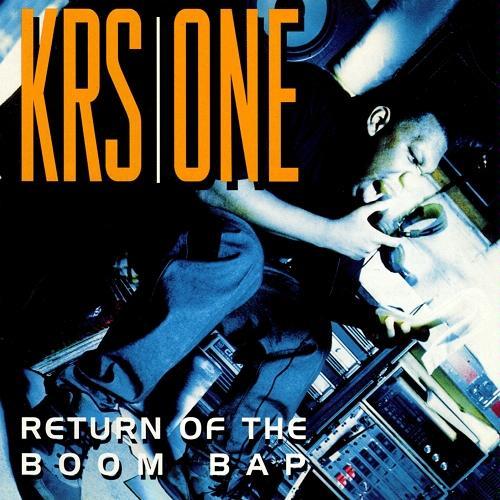
 Then, I found a sleeve of KRS-ONE's "Return Of The Boom Bop".
 [On the sleeve] He is shouting into a pair of headphones, and I heard the lo-fi voice on the album, then I noticed that the headphone might work instead of the microphone, so I tried the same thing.
 Finally it worked.
 That's my beginning of music creation.

How would you describe your sound? What makes you and your style stand out?
 I use found sounds on my music.
 Using many sounds which I recorded in my daily life, in nature, everywhere.

 Now, we can find tools to make music so easily.
 Actually so many people are making music.
 I think it's a great thing that we can find a way to do what we want to do.
 But actually it's so difficult to be original.
 There are so many digital sounds we can get so easily.

 As I said, I'm creating with what I've recorded,
 I know it's not a innovative way of making music, but real sounds have a possibility to be unique.
 There are so many sounds we've never heard on this planet.

Is there a perfect time and place for listening to your music?
 I think the listener should decide the perfect moment to listen.
 In a sense, in front of my monitor speaker is the perfect place to listen though.

What inspires you most when writing a song?
 Reminiscence and Association.
 Most of the time, I decide a concept for the track.
 But when I start making it, the real sounds remind me of a memory.
 I follow the memory, then another memory is associated.
 So my music is an aggregate of my memories and imaginations.

What is your most memorable musical experience?
 It's a moment I found the headphone can work instead of the microphone.

What are your favourite three songs at the moment?
 I can't decide.

Who do you most admire in the music world?
 I can't decide.

In your opinion, what is the future of music?
 In our history, we've repeated the same things.
 So, although the technology may be evolved, I think the essence doesn't get changed so much.

What's the future of your music - what do you hope to do next?
 I just want to keep making.
 I will have many experiences in my life, then my music will be changed little by little.
 I'm thinking, now, I will investigate the texture of sound.

What, aside from music, is most important to you?
 I love most of the arts.
 For me, creativity is most important.
 And I can't live without beer.


I'm looking forward to what Yosi might do next. If he will be exploring sound texture, as opposed to the sounds themselves, then we can expect some interesting noises to make their respective ways onto his future repertoire of songs. It seems as though he's always searching for something new, exploring the world in terms of the sounds that can be found upon or even within it. In that sense, despite his modest dismissal of his field recording stuff as "not an innovative way of making music", he is an innovator; an explorer, at the very least.

To look at the world of music, or - for Yosi's way of thinking - sound itself, with genuine curiosity and pioneering spirit, especially to such an extent that one's most memorable musical memory is finding out that you can use headphones as a microphone, is a good way to look at things. It's not just going through the motions; it's delving deep past music theory and chord progressions and all that blah right to the most basic, natural, and memory-invoking noises that the world has to offer. It's no wonder that his music seems to take you away somewhere else, and will most likely continue to do so.

Shoutout to Yosi Horikawa for making nice music and being a nice guy - thank you very much!


← #10: STARLIT EVERGLADES #12: CORY JREAMZ → - - - - - - - - - - - - - - - - - - - -
Like Yosi Horikawa on Facebook
Listen to Yosi Horikawa on Soundcloud
Hear more Yosi Horikawa on Myspace